Guide
Best beaches in Lanzarote: Papagayo, Famara, Puerto del Carmen and the Blue Flag ones
Lanzarote beaches: Papagayo, Famara, Puerto del Carmen and the 6 with a 2026-2027 Blue Flag, with facilities, bus access and swimming warnings.
In short
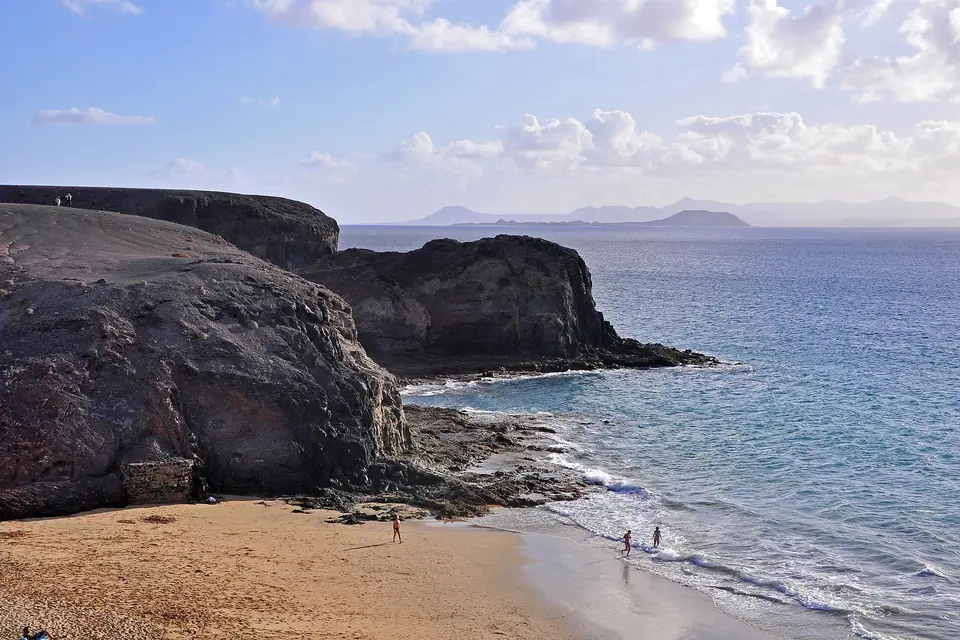
Lanzarote has six beaches with a 2026-2027 Blue Flag: El Reducto (Arrecife), Playa Grande, Matagorda, Playa Chica and Pocillos (Puerto del Carmen) and Playa Blanca. The coves of Papagayo, in Yaiza, have white sand and calm water, but you reach them along a dirt track and Yaiza’s official page quotes a €3 entry fee, card only. Famara is for surfing, with strong waves and currents.
Lanzarote’s beaches fall into three areas with very different characters. In the south, Papagayo and Playa Blanca (Yaiza) have calm water and pale sand. In the centre-south, Puerto del Carmen (Tías) groups four town beaches with a Blue Flag. In the north and west, at places such as Famara or La Cantería, the waves are strong and surfing and wind rule.
The details come from the beach pages of Yaiza town council, Turismo Lanzarote (the island council), Turismo Teguise, ADEAC’s Blue Flag list and the bus company’s website, all checked on 25 November 2026. Confirm fees and swimming conditions before you go.
The beaches with a 2026-2027 Blue Flag
ADEAC’s official 2026-2027 list includes only six Lanzarote beaches: El Reducto (Arrecife), Playa Grande, Matagorda, Playa Chica (which ADEAC lists as Pila de la Barrilla) and Pocillos, the four of them in Puerto del Carmen (Tías), and Playa Blanca (Yaiza). Across the Canary Islands there are 52 beaches in 29 municipalities.
Papagayo, Playa Dorada, Flamingo, Famara, La Garita and the Costa Teguise beaches are not on that list. A flag does not guarantee that the beach is open for swimming: El Reducto, for instance, was closed because of sewage spills (from October 2025 to April 2026, with a new warning on 28 July 2026, according to the Canarian public broadcaster and local press), and Pocillos closed in October 2025 and reopened on the 15th. Check swimming conditions on the day.
Papagayo: white-sand coves and calm water
The Punta del Papagayo beaches are in Yaiza, on the south coast, east of Playa Blanca, inside the Los Ajaches Natural Monument. Yaiza’s official page describes several coves. El Papagayo measures 120 m by 15 m, with fine white sand and calm water. Mujeres is the largest, at 395 m by 85 m, with a car park, cleaning and bins. La Cruz or del Pozo is 320 m by 60 m. Puerto Muelas and Caleta del Congrio, each 130 m by 10 m, and the Caletón de San Marcial, 35 m by 6 m and reached on foot, are listed as nudist. Turismo Lanzarote recommends the area for families, swimming, diving and snorkelling.
On that page Yaiza town council gives an entry fee of €3, card payment only, for people who do not live on Lanzarote. Confirm the fee and the checkpoint hours before you go. Yaiza’s page lists no facilities at the coves.
You get there by car from Playa Blanca, heading towards Femés, along a signposted dirt track with car parks beside the coves. No bus reaches Papagayo: lines 6 and 60 go as far as the Estación and the Muelle in Playa Blanca, and from there you continue by car, on foot or by bike. By sea, catamaran trips to Papagayo leave from Puerto Calero.
Catamaran sail to the Papagayo beaches from Puerto Calero
A catamaran sail from Puerto Calero to Papagayo with swimming, snorkelling, lunch and drinks on board, in a family and an adults-only version.
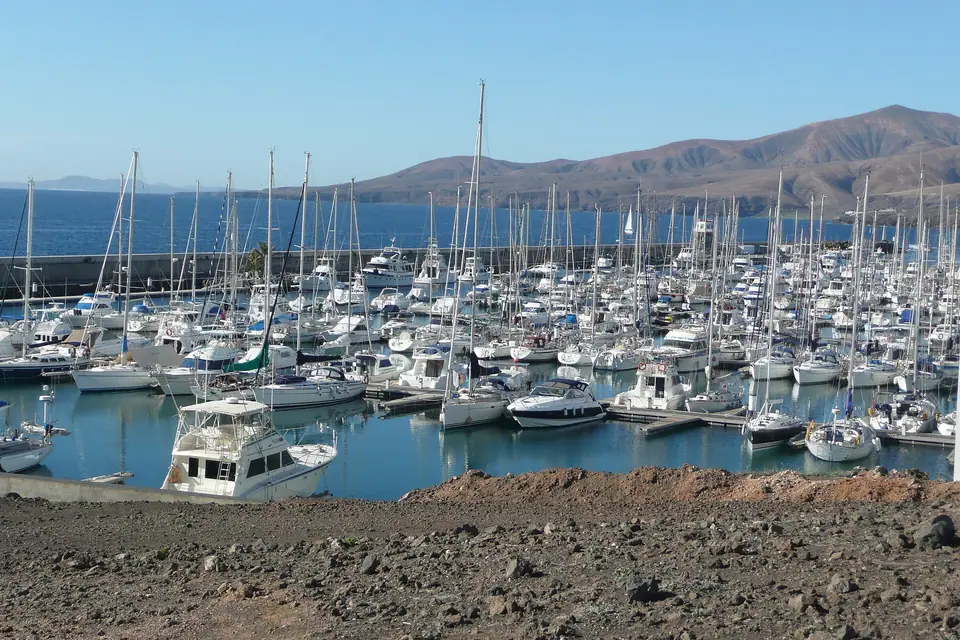
Shared 4-hour catamaran to Papagayo (max. 12 guests)
A catamaran outing with just 12 places from Puerto Calero to Papagayo, with lunch, drinks, kayaks, paddle boards and snorkel gear.
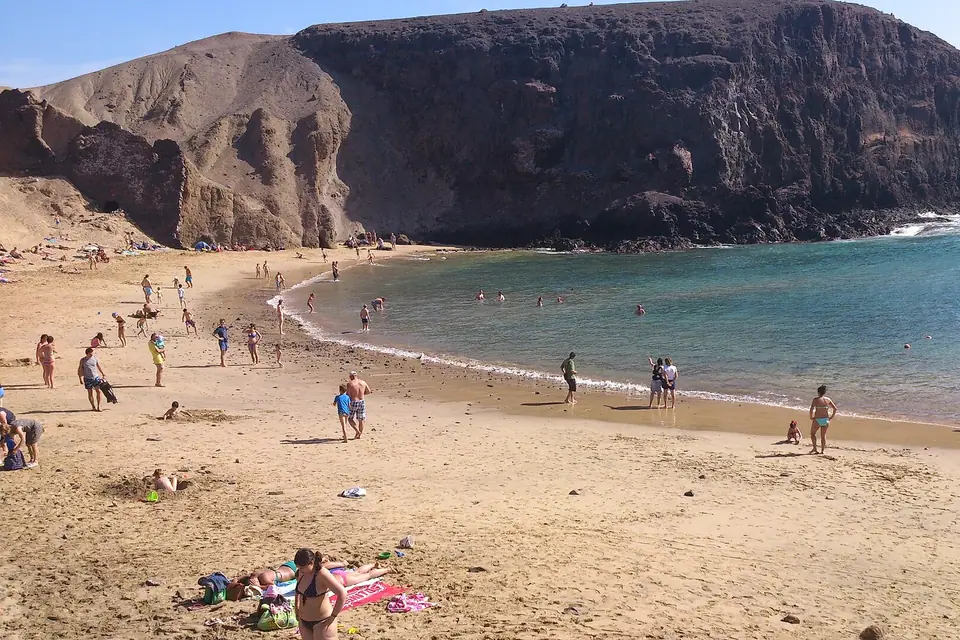
Guided kayak and snorkel trip to the Papagayo beaches
A guided paddle from Playa Blanca to Papagayo with a snorkel stop, snacks and equipment included; no experience needed.
Google lists it as closed on Sundays
Playa Blanca: Playa Blanca, Playa Dorada and Flamingo
Playa Blanca (Yaiza) has three town beaches with calm water. The one that shares the town’s name, Playa Blanca, has a 2026-2027 Blue Flag, a promenade, showers, bins, restaurants and watersports hire. Playa Dorada is 300 m long and has sunloungers, parasols, a promenade and ramps for people with reduced mobility. Flamingo is 200 m long, with breakwaters, showers, sunloungers, parasols, parking and restaurants. Turismo Lanzarote lists all three as suitable for families and free of wind.
By bus, lines 6 (Arrecife–Puerto del Carmen–Playa Blanca) and 60 (Arrecife–Playa Blanca) reach the Estación and the Muelle in Playa Blanca. Line 30, a circular route through the town, stops at Flamingo, the Muelle, Avenida Papagayo and Playa Dorada.
Puerto del Carmen: Playa Grande, Pocillos, Matagorda and Playa Chica
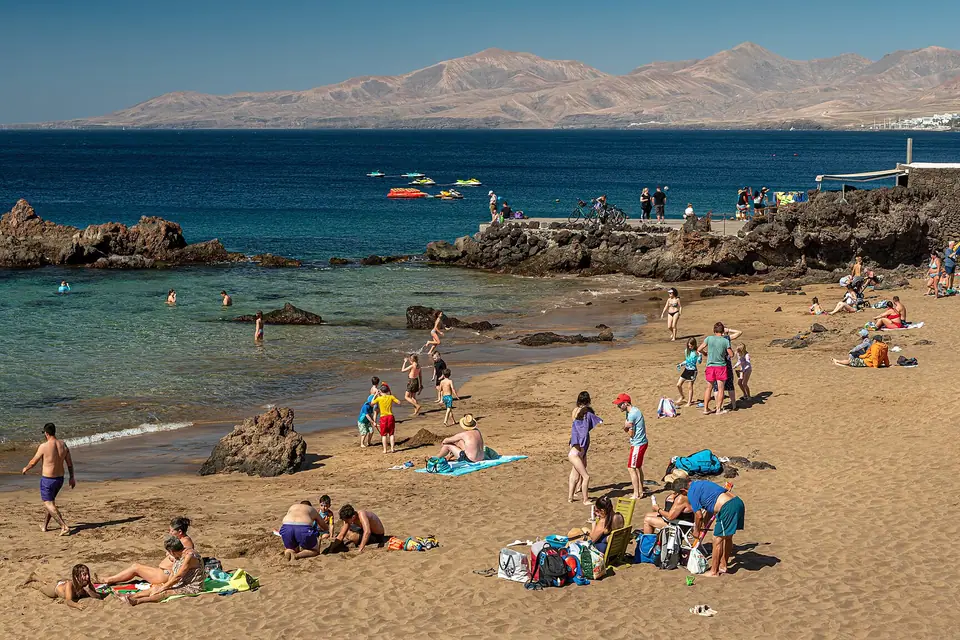
All four beaches in Puerto del Carmen (Tías) have a 2026-2027 Blue Flag. Playa Grande is 1,190 m long, with golden sand and calm water, sunloungers, parasols, restaurants, parking, a promenade, showers, lifeguards and toilets. Pocillos is 1,130 m long, has a lifeguard, is adapted for people with disabilities and has a children’s play area. Matagorda is 850 m long, with fine golden sand, sunloungers and parasols.
Playa Chica is a small cove closed in by lava flows, with sunloungers and parasols, and one of the island’s main diving spots, with dive schools and a small jetty with restaurants. Bus line 2 (Arrecife–Puerto del Carmen) serves the area, and has a stop called Matagorda.
Boat dives from Puerto del Carmen
Trips on the boat Maresía I to Playa Chica, the Blue Hole, Waikiki, La Catedral and the Museo Atlántico.
Famara: surf, wind and strong currents
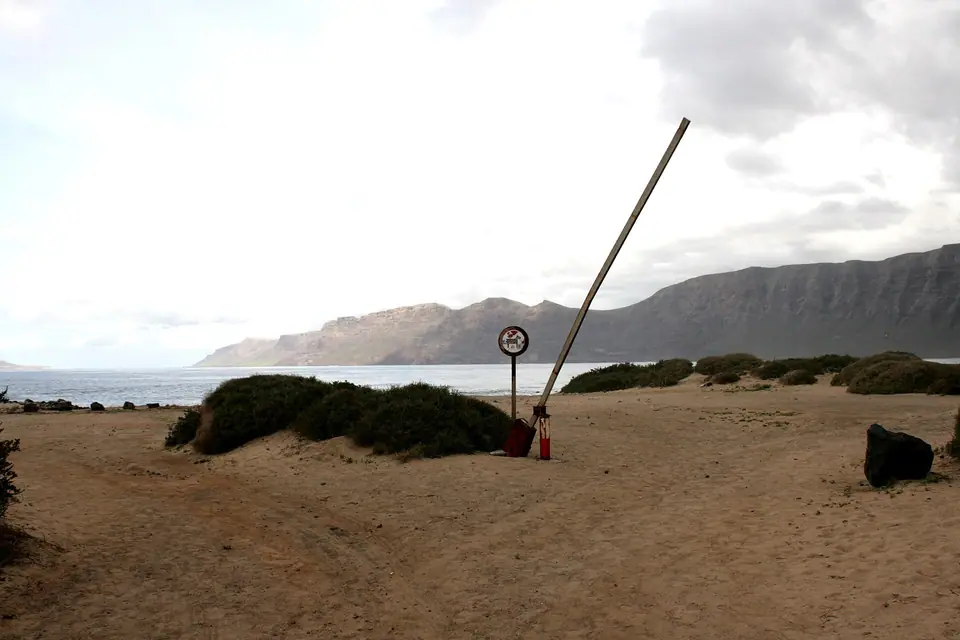
Famara beach (Teguise) has fine, toasted sand, dunes behind it and runs for several kilometres to the Risco de Famara; Turismo Lanzarote gives 6,000 m. Teguise town council warns that you must take great care when swimming, because the beach has strong waves and powerful currents. That is why it is above all a beach for surfing, bodyboarding, kitesurfing and windfoiling. Turismo Lanzarote lists it with lifeguards, parking almost at the sand and no facilities for reduced mobility.
By bus, line 20 (Arrecife–Caleta de Famara) leaves Arrecife at 06:20, 09:45, 14:00, 17:45 and 20:45, according to its website, which does not say on which days. Line 31 (Costa Teguise–Caleta de Famara) leaves Hotel Salinas at 09:30, 11:00, 15:40 and 19:10.
Surf lessons on Famara beach
Lessons for beginners and more advanced surfers on Famara beach, with equipment and insurance included and multilingual instructors.
Kitesurfing course at Famara
Kitesurfing courses on the Famara coast from a school based in Caleta de Famara for nearly three decades.
The north: La Garita, Punta Mujeres, La Cantería and Caletón Blanco
In Haría, La Garita beach, in Arrieta, is 810 m long, with golden sand and calm water, restaurants, beach bars, parking, a promenade and toilets. Punta Mujeres has a natural pool with calm water, suitable for families. Bus line 9 (Arrecife–Órzola) stops at Arrieta, Los Morros de Arrieta and Punta Mujeres.
Near Órzola, La Cantería is 300 m long, with golden sand, strong waves, no facilities beyond bins and no public transport; it lies in a protected natural area, a quarter of an hour’s walk from Órzola, and is used for surfing. Less than 2 km from Órzola is Caletón Blanco, 50 m of white sand with calm water and parking, suitable for families.
Janubio, El Golfo, El Reducto, Costa Teguise and La Francesa
Janubio (Yaiza) is 820 m long, with black sand and gravel and few people; Yaiza’s page describes it as a windy beach with strong waves, and Turismo Lanzarote marks strong waves and not suitable for families. At El Golfo, the Charco de los Clicos is not a swimming beach: the Canary Islands government states that swimming is forbidden.
El Reducto, in Arrecife, is 500 m long, with golden sand and calm water, urban, with restaurants, showers, toilets and a bus; check its swimming status first, because of the closures mentioned above. In Costa Teguise (Teguise), Las Cucharas is 640 m long, with water sheltered by breakwaters, lifeguards, showers and a bus stop, and is one of the windsurfers’ favourite beaches. El Jablillo is 150 m long, with a breakwater. Playa Bastián is 375 m by 15 m, with a rocky shoreline and awkward entry. None of the three has a 2026-2027 Blue Flag. Bus line 1 (Arrecife–Costa Teguise) stops at Playa Roca and Playa Bastián.
On La Graciosa, La Francesa is 435 m by 30 m, with fine white sand and calm water, unspoilt, with no facilities or public transport; you get there on foot or by bike. To reach the island, see the La Graciosa guide.
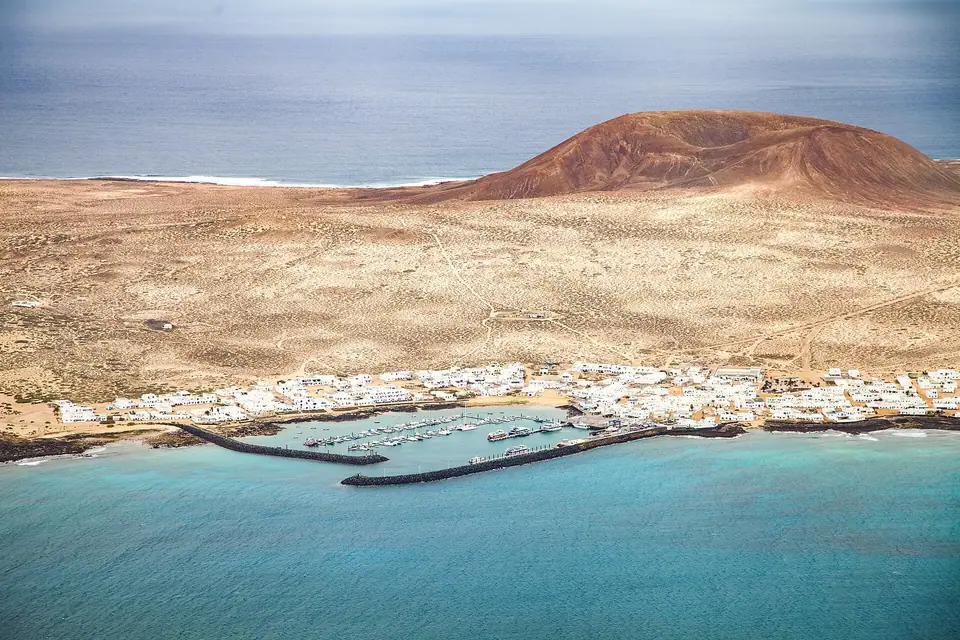
Órzola to La Graciosa ferry with Biosfera Express
A crossing of around 25 minutes between Órzola harbour and Caleta de Sebo on La Graciosa, with several sailings a day.
Which beach to pick for what you want
With children: Pocillos (lifeguard, play area and adapted), Playa Dorada, Flamingo, Caletón Blanco and Las Cucharas, all with calm water. For snorkelling and diving: Papagayo for snorkelling and Playa Chica for diving, with dive schools. For surfing: Famara and La Cantería. For windsurfing: Las Cucharas. Free of wind, according to Turismo Lanzarote: Papagayo, Playa Dorada, Flamingo, Playa Blanca and El Reducto.
For few people: La Cantería and Janubio, with low occupancy. For naturism: Puerto Muelas, Caleta del Congrio and the Caletón de San Marcial, which Yaiza marks as nudist. Natural pools: Punta Mujeres, the Charcones de Janubio and Caletón Blanco. Without a car: Playa Blanca, Puerto del Carmen, Costa Teguise and Famara, with a bus to the beach or close by.
Official sources
Written by us from these sources, consulted up to 25 November 2026. Rules and traffic restrictions change: check them before you travel.
- Yaiza town council: Punta del Papagayo beaches
- Yaiza town council: Playa Blanca beaches
- Yaiza town council: El Golfo area beaches
- Turismo Lanzarote: Papagayo beaches
- Turismo Lanzarote: top beaches
- Turismo Lanzarote: Famara beach
- Turismo Lanzarote: Playa Grande
- Turismo Lanzarote: Los Pocillos
- Turismo Lanzarote: La Cantería
- Turismo Teguise: Famara beach
- Turismo Teguise: Las Cucharas
- ADEAC: Blue Flag beaches 2026
- RTVC: Pocillos reopens after the spills
- RTVC: pollution at El Reducto beach (28-07-2026)
- Arrecife Bus: lines
Frequently asked questions
What are the best beaches in Lanzarote?
For white-sand coves with calm water, Papagayo, in Yaiza. For town beaches with facilities, the four in Puerto del Carmen and Playa Blanca, all with a 2026-2027 Blue Flag. For surfing, Famara.
Which Lanzarote beaches have a Blue Flag?
According to ADEAC for 2026-2027: El Reducto, Playa Grande, Matagorda, Playa Chica (Pila de la Barrilla), Pocillos and Playa Blanca.
Do you have to pay to enter Papagayo?
The official page of Yaiza town council gives €3, card only, for people who do not live on Lanzarote. Confirm it before you go.
Can you get to Papagayo by bus?
No. No line reaches Papagayo. Lines 6 and 60 go as far as Playa Blanca, and from there you have to continue by car along the dirt track, on foot or by bike.
Can you swim at Famara?
Teguise town council warns that you must take great care when swimming, because the beach has strong waves and powerful currents.
Which Lanzarote beaches are good for children?
Pocillos, with a lifeguard and a children’s play area, Playa Dorada, Flamingo, Caletón Blanco and Las Cucharas, all with calm water.
Can you swim at the Charco de los Clicos, in El Golfo?
No. The Canary Islands government states that swimming is forbidden; it is not a swimming beach.
Atlas de Lanzarote editorial team · reviewed on 25 November 2026
More guides
- César Manrique in Lanzarote: what to visit, from the Foundation to the Cabildo centres
- Jameos del Agua tickets and the Cabildo centres: prices, opening hours and booking
- Ferry from Lanzarote to Fuerteventura: operators, crossing time, car and the Isla de Lobos permit
- La Graciosa from Lanzarote: ferries from Órzola, beaches and island rules
- Lanzarote in winter: November to March weather, what is open, Christmas, Three Kings and Carnival
- What to see in Lanzarote: 12 places, from Timanfaya to La Graciosa
- Lanzarote in the rain: what to do
- Lanzarote with kids: what to do
- Free and cheap plans on Lanzarote
- Relaxed plans on Lanzarote, no effort needed