César Manrique House-Museum, Haría
Manrique's last home in Haría, preserved as a house-museum by the foundation.
Lanzarote · Haría & the north
Also known as Haría y el norte
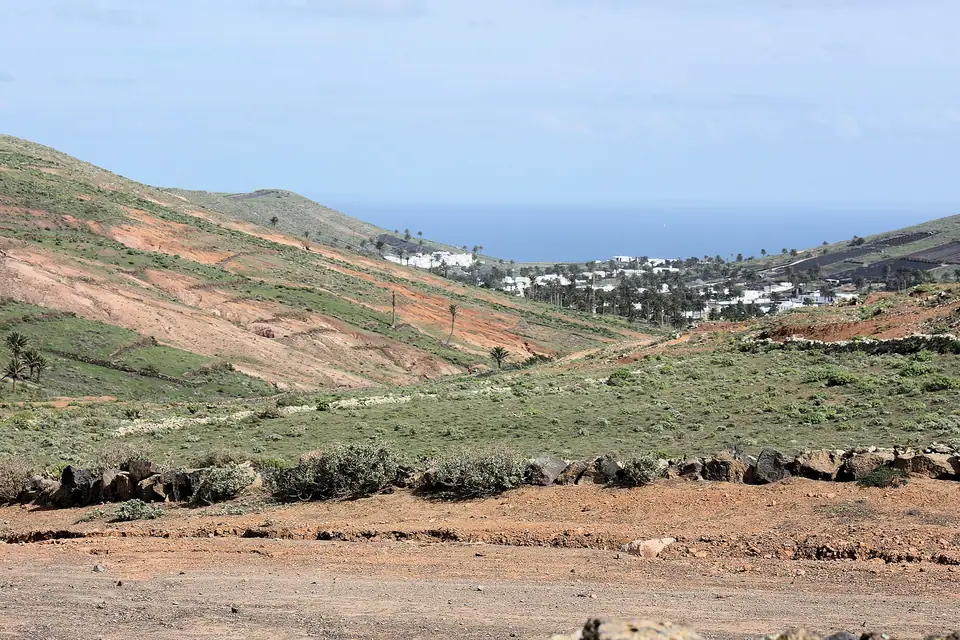
The green north of the island, with a palm-filled valley, viewpoints over La Graciosa and the house where Manrique lived.
0/7No stamps so far: 7 towns still to see See my passport
Haría covers 106.59 km², about 30% of it protected natural area, and had 5,623 inhabitants in 2025 (INE). In 1585 it was granted its own baptismal font and priest, something unique on the island at the time, and on 1 August 1586 the pirate Morato Arráez attacked the village with some 600 men. Its settlements include Órzola, Arrieta, Punta Mujeres, Máguez, Guinate, Ye, Tabayesco, Mala and Charco del Palo.
Haría is a good base in the north, because from the village, about 6 km in a straight line from Jameos del Agua, about 6 km from the Cueva de los Verdes, about 8 km from the Mirador del Río and about 9 km from Órzola, you can reach almost everything worth visiting in this part of Lanzarote.
In the village itself, César Manrique's last house, now a house museum, is 1 km from the centre and costs €10, with an hour's visit. There is a joint ticket of €17 with the Tahíche foundation, valid for 15 days, useful for anyone seeing both houses in the same week. Jameos del Agua costs from €17 (1 to 2 hours) and the Cueva de los Verdes also from €17 (about 50 minutes with a guide); the Mirador del Río, from €9, takes about 45 minutes.
A full day in the north can be ordered like this: house museum in the morning, Jameos and the cave around midday and the viewpoint in the afternoon, with Órzola to finish. If a boat to La Graciosa is planned for the next day, the crossing takes about 25 minutes and the day can be organised without hurry, with the departure from Órzola.
Manrique's last home in Haría, preserved as a house-museum by the foundation.
Centros de Arte, Cultura y Turismo del Cabildo de Lanzarote (CACT)
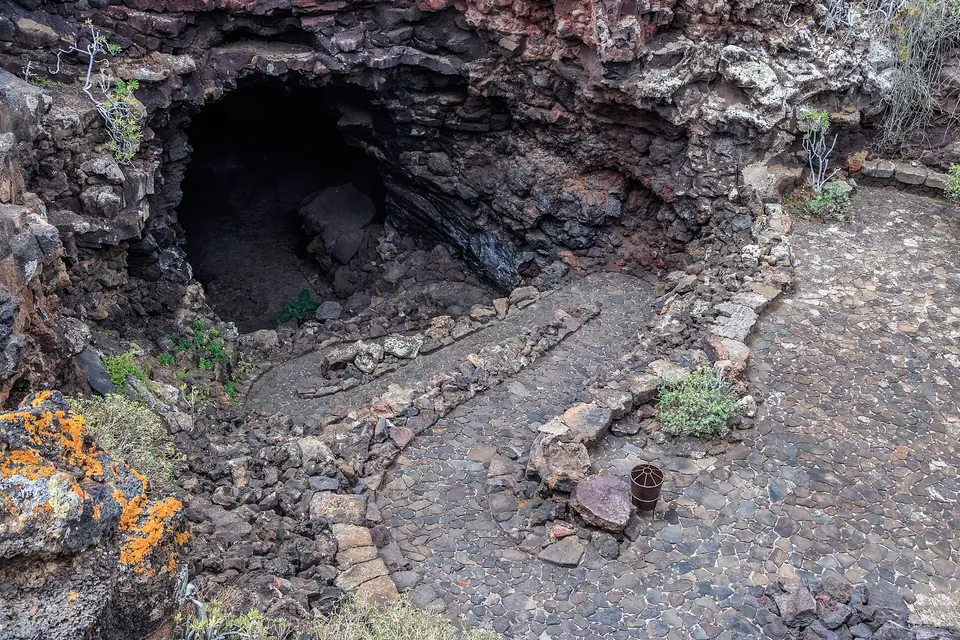
A guided visit of about 50 minutes through galleries of the La Corona lava tube, with light installations.
Google lists it as closed on Saturdays and Sundays
Centros de Arte, Cultura y Turismo del Cabildo de Lanzarote (CACT)
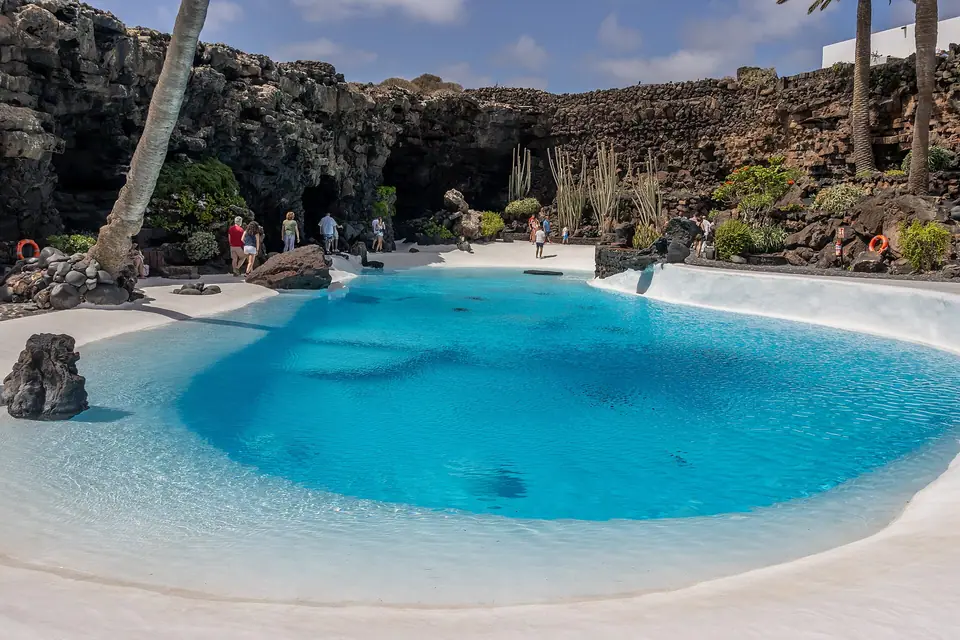
A stretch of the La Corona lava tube that César Manrique turned into a space of lake, garden and auditorium.
Google lists it as closed on Saturdays and Sundays
Centros de Arte, Cultura y Turismo del Cabildo de Lanzarote (CACT)
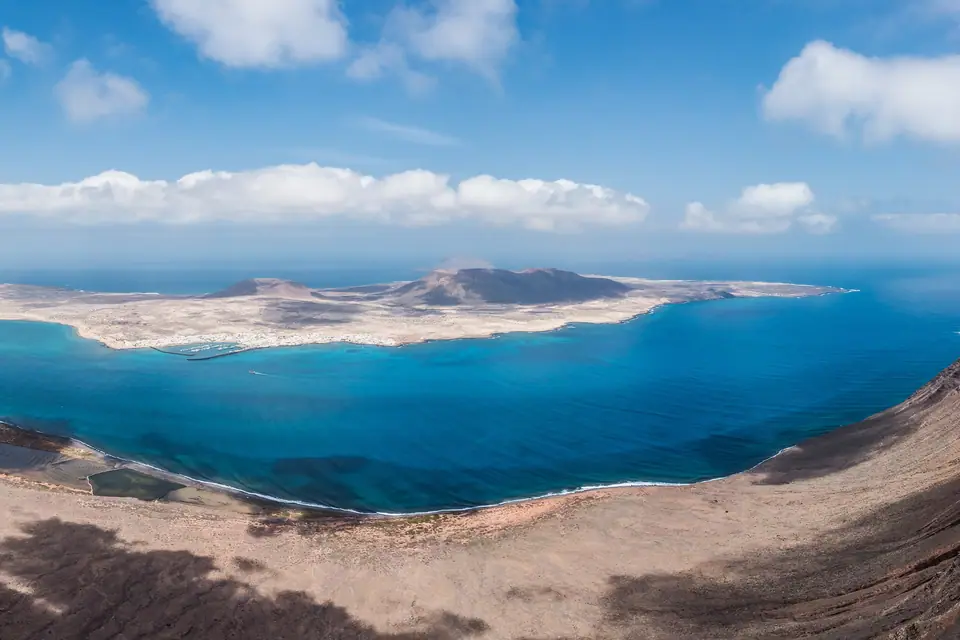
Manrique's viewpoint cut into the Famara cliff, with arched windows over El Río strait and La Graciosa.
Google lists it as closed on Saturdays and Sundays
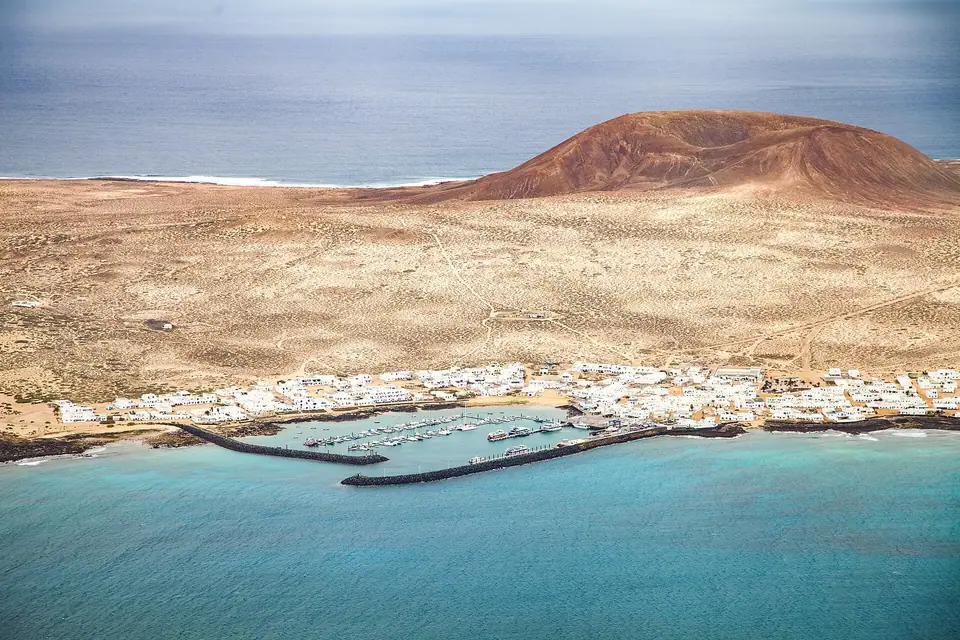
A crossing of around 25 minutes between Órzola harbour and Caleta de Sebo on La Graciosa, with several sailings a day.
A catamaran excursion from Órzola to La Graciosa, with the sea and coastline of the Chinijo archipelago as the main attraction.
A full day combining hotel pick-up, the crossing to La Graciosa and a catamaran cruise with paella, drinks, swimming and snorkelling.
Dots are experiences in or around the town, coloured by category; the stamp marks the town.
Nearest first, up to 12 km as the crow flies.
Lessons for beginners and more advanced surfers on Famara beach, with equipment and insurance included and multilingual instructors.
Kitesurfing courses on the Famara coast from a school based in Caleta de Famara for nearly three decades.
Centros de Arte, Cultura y Turismo del Cabildo de Lanzarote (CACT)
A former rofe quarry in Guatiza turned into a terraced garden with cacti from five continents.
Google lists it as closed on Saturdays and Sundays
A cliff-carved house at Nazaret with terraces and gardens, open with plain entry or a guided tour.
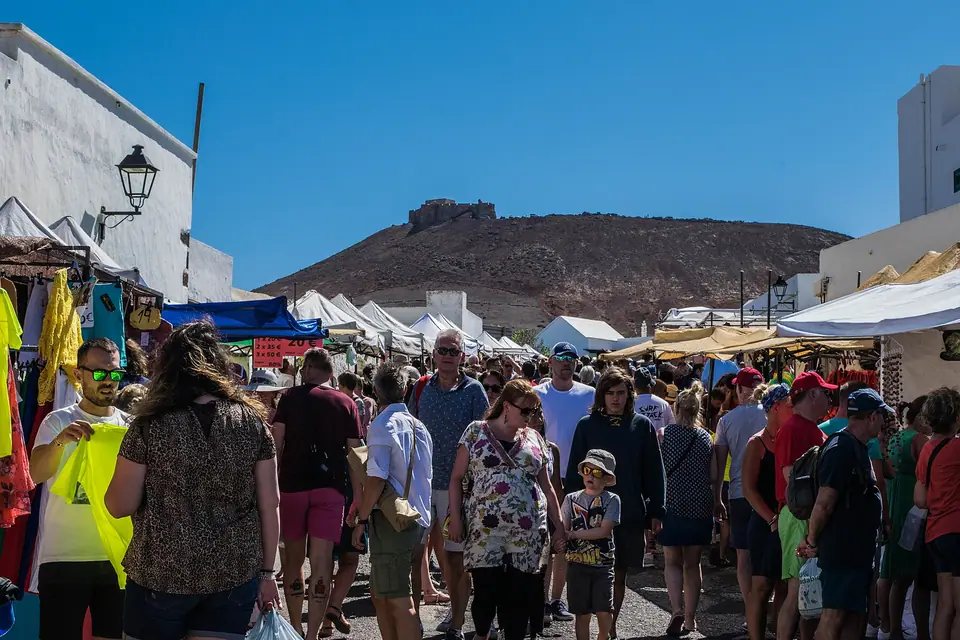
Sunday craft and stall market in Teguise's old town, free to enter.
San Juan night, around 23-24 June, with a big bonfire in which Facundo is burned; 24 June is a local holiday in 2026 and 2027.
The queseras de Bravo in the Malpaís de La Corona are radial volcanic-stone structures whose purpose is unknown.
Search for stays in the town or nearby. These are open searches on external sites, so compare price, location and terms before booking.
Affiliate links appear here; book through one and we may receive a commission, at no cost to you. About affiliate links
Haría covers 106.59 km², about 30% of it protected natural area, and had 5,623 inhabitants in 2025 (INE). In 1585 it was granted its own baptismal font and priest, something unique on the island at the time, and on 1 August 1586 the pirate Morato Arráez attacked the village with some 600 men. Its settlements include Órzola, Arrieta, Punta Mujeres, Máguez, Guinate, Ye, Tabayesco, Mala and Charco del Palo. In Atlas de Lanzarote you will find 7 experiences in town, 5 around it: César Manrique House-Museum, Haría, Cueva de los Verdes (Green Caves), Jameos del Agua, Mirador del Río, Órzola to La Graciosa ferry with Biosfera Express, Graciosasail: catamaran from Órzola to La Graciosa.
San Juan night, around 23-24 June, with a big bonfire in which Facundo is burned; 24 June is a local holiday in 2026 and 2027.
The queseras de Bravo in the Malpaís de La Corona are radial volcanic-stone structures whose purpose is unknown.
Written by us from these sources, consulted on 2026-11-21. Dates, opening times and bus lines can change: check them before you go.